
Melk Abbey – Austria’s Baroque Masterpiece
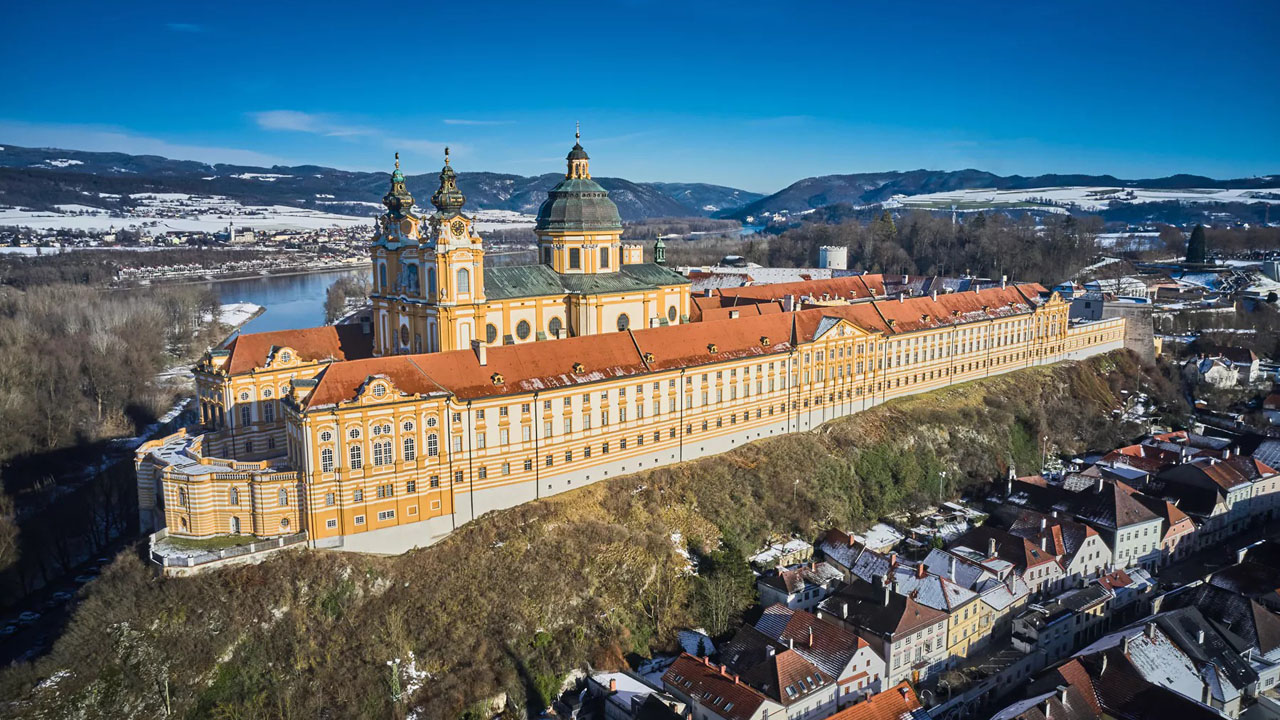
Celebrated for its architectural grandeur, cultural significance, and spiritual heritage, Melk Abbey stands as one of Austria’s most remarkable monastic sites. Perched above the Danube River in Lower Austria, it exemplifies the pinnacle of Baroque design and monastic scholarship.
Founded in 1089, Melk Abbey has been a center of religious life, learning, and art for over nine centuries. Its magnificent Baroque architecture, designed in the early 18th century, features elaborate frescoes, ornate stucco, and an impressive library containing medieval manuscripts and rare books, reflecting centuries of intellectual and artistic achievement. The abbey’s reconstruction and artistic flourish were strongly supported by the Habsburg emperors, who viewed Melk as a symbol of imperial power, religious devotion, and cultural prestige.
The abbey’s church, with its gilded altars and ceiling frescoes, demonstrates both monastic and imperial influence, while the terraced gardens provide panoramic views of the Danube valley. Historically, Melk Abbey played a key role in preserving Austrian cultural identity, education, and monastic traditions during periods of political and social change.
Today, Melk Abbey remains a functioning monastery and welcomes visitors from around the world, offering guided tours of its church, library, and museum, as well as a glimpse into monastic life that has endured for centuries. Annually, it attracts hundreds of thousands of tourists eager to experience its artistic, spiritual, and imperial legacy.